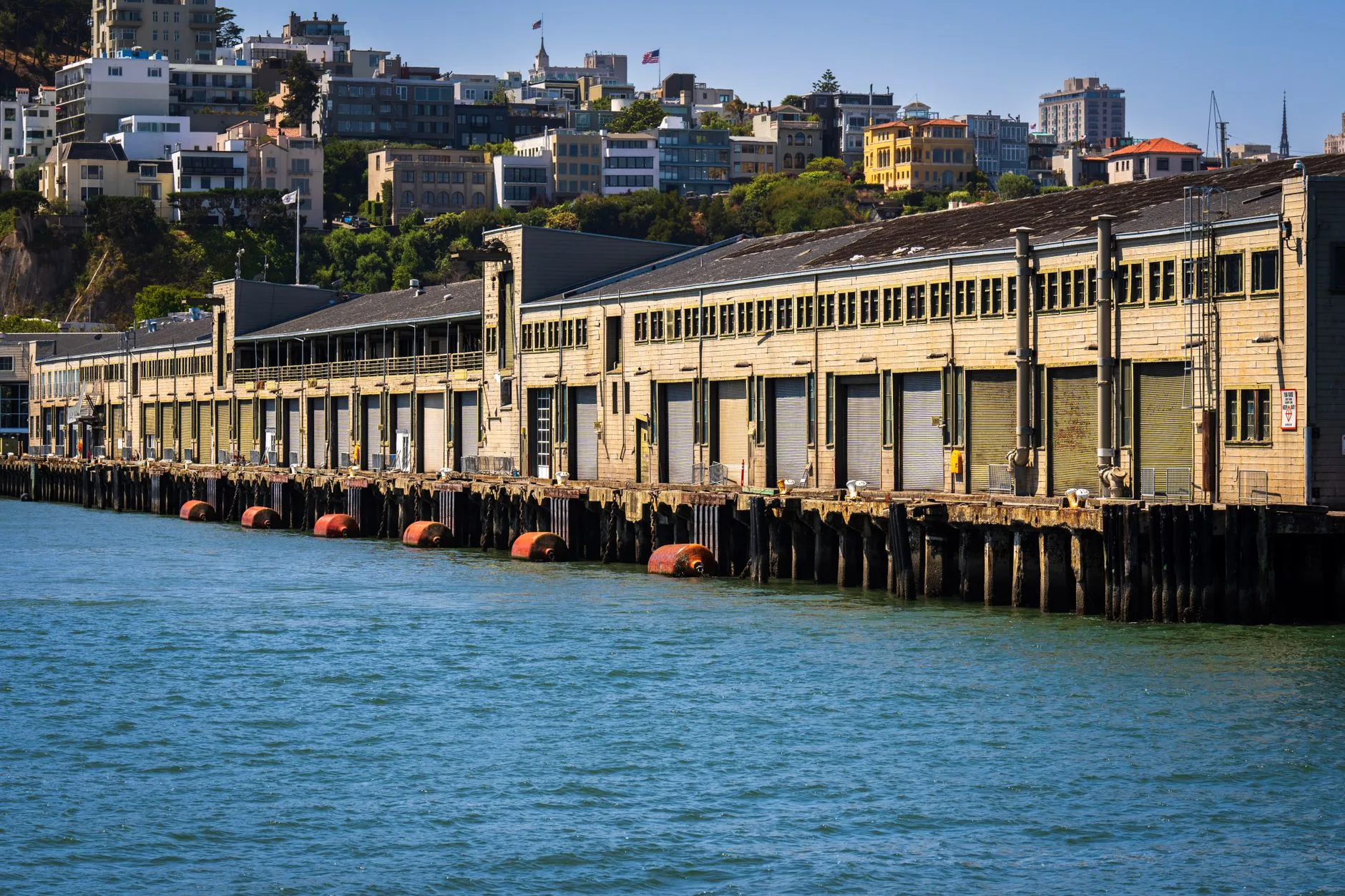
Brookfield Properties put a request to the San Francisco Port Commission on 14 July 2026. The request raises the ceiling on the 28-acre Pier 70 site from 2,150 homes to 2,750, about 28 percent, and adds two storeys to several residential buildings, from 70 feet to 90 feet. The Port Commission and the Board of Supervisors must both approve the change.
The district should take the homes. The affordable count is the term that decides whether the trade serves it, and the San Francisco Chronicle’s account carries no count. The supervisors should not vote until the count sits in the amended agreement, phase by phase.
A share moved and a count held
The announcement sets out the trade in one sentence. The number of affordable units would remain the same, and the percentage of affordable homes in the development would fall from about 30 percent to 20 percent.
Two clauses, one bargain. Only the count can be audited after the fact. A percentage belongs to a denominator that the same amendment moves.
What Brookfield put on the table
Phase one grows from 575 homes to 700. Those 700 are a 105-unit affordable building, two condominium buildings totalling 245 units, and a 350-unit apartment building at Lot E2.
Tim Bacon, Brookfield’s vice president of development, said the change could allow a 2027 groundbreaking on E2. He put the yield from the extra height at about 70 more units, and described that yield as the difference between a project on the edge of pencilling and one that starts to make a lot more sense. Bacon said Brookfield hopes to start construction next year on a 300,000-square-foot office building if the city’s office market keeps gathering momentum.
The arithmetic in the record
Thirty percent of 2,150 is 645. Twenty percent of 2,750 is 550. A count that holds across both ceilings therefore sits at or below 550, and 550 is 25.6 percent of 2,150. The published 30 percent describes a larger affordable base than the published 20 percent allows.
Both figures carry an “about”. As agreement terms, the distance between them is 95 homes. That distance is the reason the amendment needs a number in it.
Phase one already ran the experiment
The affordable building holds 105 homes inside the 700 of phase one, which is 15 percent of the phase. Against the earlier 575-home programme the same 105 units were 18.3 percent. The count held and the denominator grew by 125 homes. The district-wide shift repeats that arithmetic at larger scale.
The cost of waiting
Market-rate housing production in San Francisco has not moved since the pandemic, and this filing is one of a set that trades density for feasibility. A programme that does not build delivers no affordable homes.
The same trade runs across the city. Treasure Island moves from 8,000 units toward as many as 10,800. The former Creamery site at 655 Fourth Street went from 960 to 1,148 units, and One Oak from 460 to 541. The city cut the affordable requirement on market-rate projects from 15 percent to 5 percent. Bacon put rents up 30 percent year over year, and said construction and operating costs have risen as fast or faster.
Donovan Lacy, vice president of the Dogpatch Neighborhood Association, said the neighbourhood does not want to wait another decade for housing. He also said the associations need to understand what the changes mean for building affordable housing.
Five terms for the amendment
First, state the affordable unit count in the amended development agreement. Second, tie each phase’s affordable delivery to that phase’s market-rate units. J.R. Eppler, vice president of the Potrero Boosters and a candidate for the District 10 Board of Supervisors seat, asked for that condition in his own words: maintain at least the current minimum, and deliver affordability in each phase where other residential is delivered.
Third, publish the amended agreement before the Board of Supervisors votes. Fourth, bar substitution of affordable units out of an earlier phase into a later one. Fifth, hold the housing schedule when the office building moves, so a market decision on office space cannot reorder residential delivery.
The test is the phase
What remains is a housing programme that has to be counted. A 2,750-unit district at 20 percent holds 550 affordable homes. A 2,150-unit district that never breaks ground holds none. The phase carries the obligation, and the phase is where the city can check it.