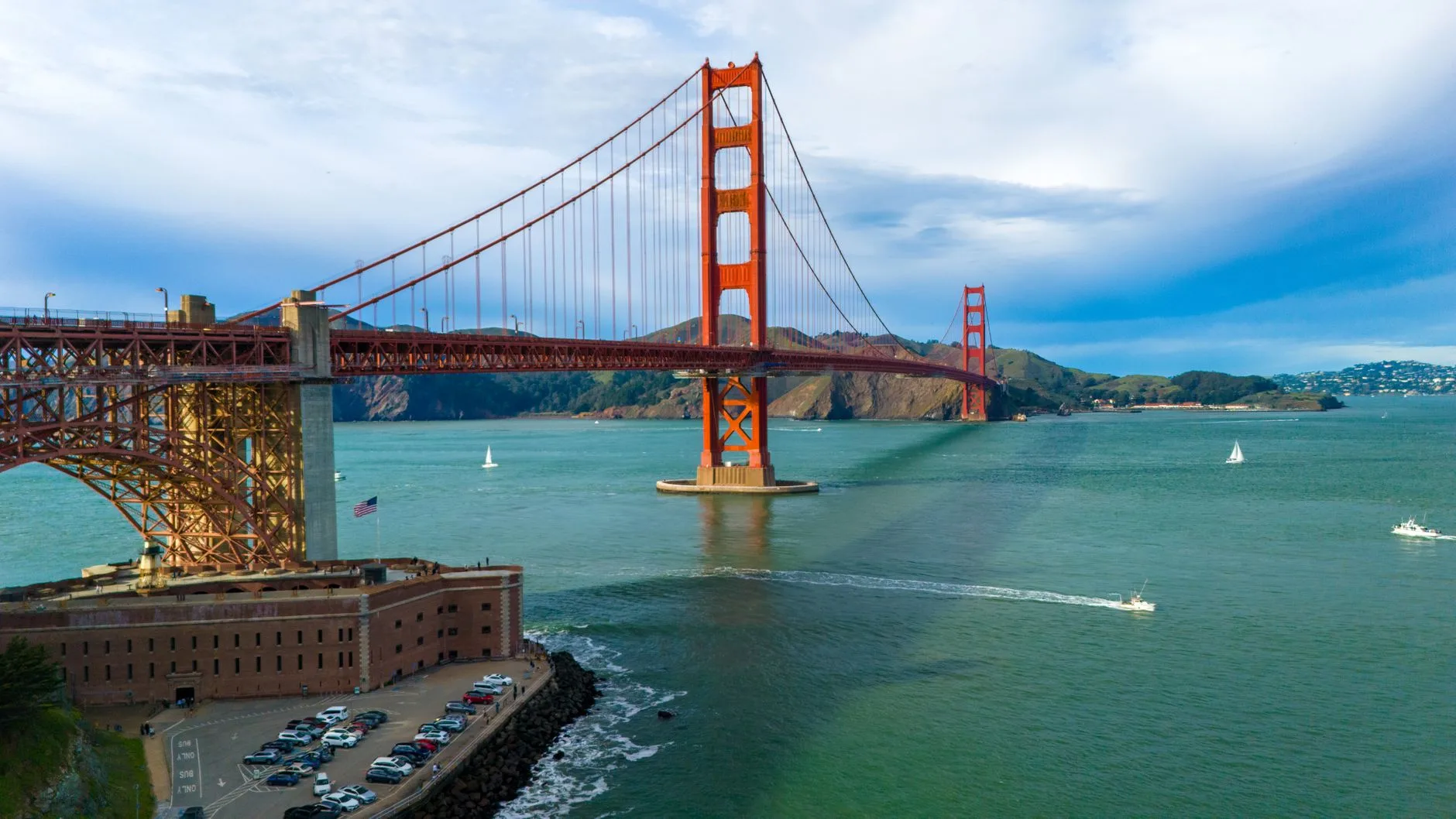
The Golden Gate Bridge, Highway and Transportation District began weeknight lane closures for seismic retrofit construction on Monday 5 October 2026. The crossing stays open in both directions at all times.
One southbound lane and two northbound lanes carry traffic between 8:00 p.m. and 5:00 a.m., Monday to Friday. Friday work ends at 7:00 a.m. Saturday. Work stops on holidays and in bad weather.
The phase runs to 2036. Contract 1 is a six-year award of $864 million. Contract 2 is a $900 million estimate with no funding attached, and the district expects five further years.
The Term an Asset Carries
A hotel on either side of the strait sells a night's sleep and an arrival. The district has published a lane count and an hour range for the next six years. An owner holding the asset has to price the arrival leg of that sale for the same period.
A hold period that ends before contract 1 ends will carry the restriction through its whole life. Say so in the acquisition file.
What the Record Publishes
The district publishes a dated closure notice, the per-direction lane counts and the hours. The project pages carry the phase window and the contract values.
An occupancy, average daily rate or revenue series for either side of the strait sits on no district page, and on no page of the board or trade coverage read for this piece. The same holds for a delay estimate in minutes per night.
A budget line built on a number no agency published is an assumption. Name it as one in the file.
Who Carries the Cost
Four terms belong in the contracts around the asset. A disclosure line in group and event agreements that names the closure nights falling inside the stay dates. A cancellation and attrition clause that answers a missed arrival window. An arrival instruction the front desk can give with the district's dated notice in hand. In a management agreement, a named party for the cost of guest transport on the north side of the strait.
Each term moves a cost between the guest, the operator and the owner. The negotiation decides which side holds it, and the district's notice is the evidence both sides can read.
Two Sides, Two Legs
Southbound traffic loses two of its three lanes. A guest driving from Marin County into San Francisco arrives inside that restriction. A guest leaving San Francisco for Marin drives the northbound leg, which keeps two lanes.
For a San Francisco asset the exposure sits on the evening arrival. For a Marin asset it sits on the morning departure and on the hour the lanes reopen. An owner with assets on both sides holds both risks in one portfolio.
What to Ask the District
Whether any agency intends to publish a delay count or an overnight volume figure for the corridor. Whether the closure notice will cover every week of the contract. Whether any dataset covers the properties at the north end of the span.
The district has published dated notices covering the weeks ahead. A property can hold that calendar without asking anyone.
The Instruction for This Quarter
Read the dated notice and put its closure nights on the same sheet as the arrival forecast. Log arrivals after 8:00 p.m. by origin, against closure nights and against the nights either side. Write the closure calendar into group contracts as a disclosed condition.
Six weeks of that log gives an owner a series the district has not published. It is the only series the file will hold for the next six years.
The Question at the Next Budget
What was the after-8:00 p.m. arrival count on closure nights, and what was it on the nights either side?
An owner who can answer has priced the restriction. An owner who cannot is negotiating on the other side's numbers.