The record first
Riverside Wharf broke ground on 3 December 2025 at 114 SW North River Drive. The developers' release is dated 4 December 2025 and puts the cost at $350 million.
MV Real Estate Holdings and Driftwood Capital develop the project with Merrimac Ventures. Moss Construction holds the general contract. Completion is slated for fall 2028.
The programme is two towers of nine stories and more than 200,000 square feet. A 167-key Dream Miami hotel sits inside a 30,000-square-foot nightclub and rooftop pool dayclub, a 12,000-square-foot event hall, 16,000 square feet of restaurants, and the rebuild of The Wharf Miami. CUBE 3 Architects designed the project through Jon Cardello. Gensler produced the construction documents. ICRAVE designed the interiors.
That is the record. The argument follows.
347 square feet of venue per key
The release publishes 58,000 square feet of venue space against 167 keys. That works out to 347 square feet of venue for every room, with the nightclub alone accounting for 180 and the event hall for 72.
The ratio sets the revenue order. A 30,000-square-foot club and a rooftop dayclub sell tickets and tables on weekends. A 12,000-square-foot hall sells weddings and corporate dinners midweek.
The keys supply the guest who stays past the last set and the group that books the hall with rooms attached. An operator on this asset prices the venue calendar first and the room rate second.
The public items carry no number
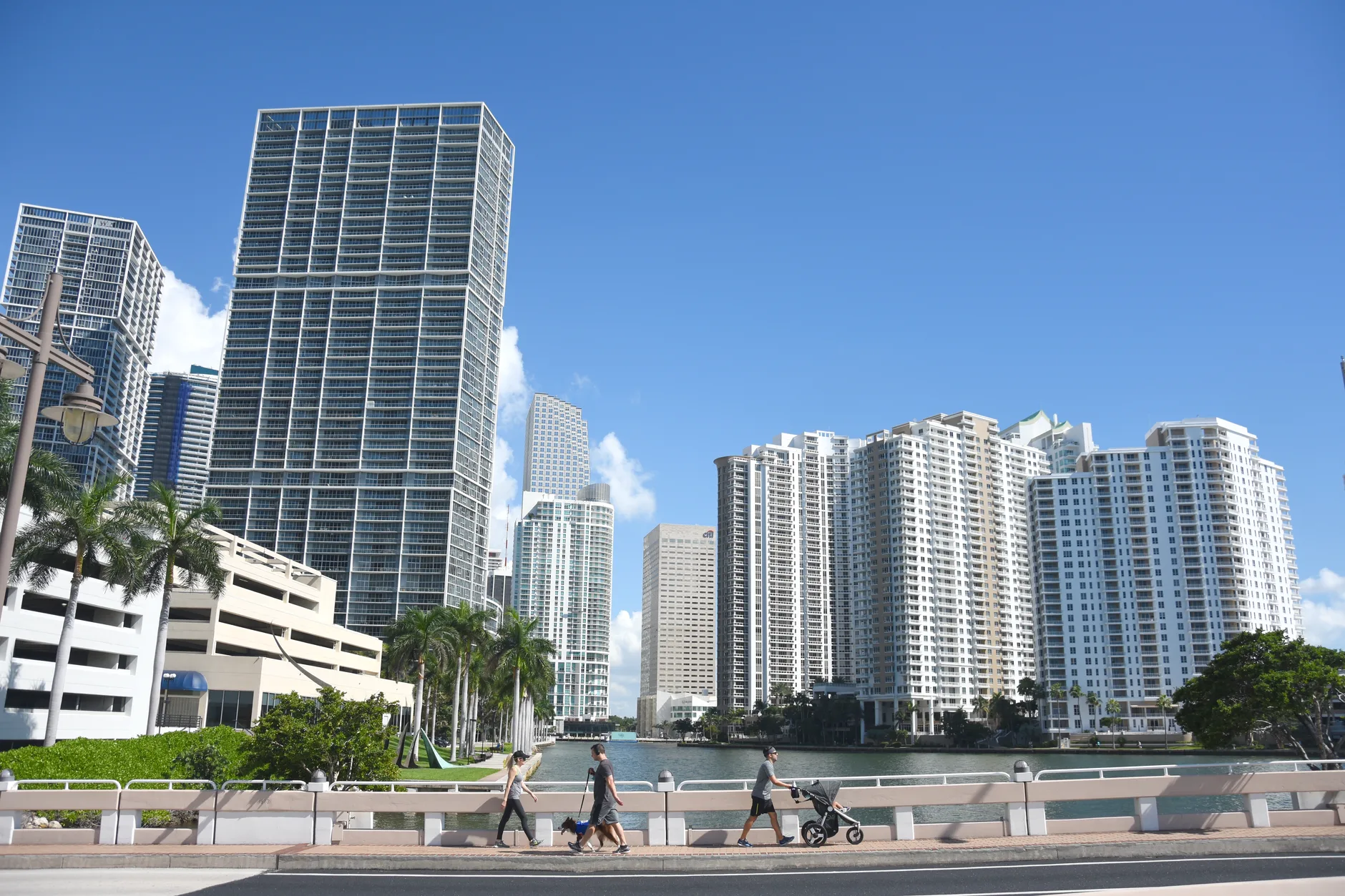
The same release commits the developers to a public riverwalk along the site, a new seawall described as a sea-level-rise mitigation measure, and a pop-up Garcia’s Fish Market on the grounds.
The release publishes no length for the riverwalk, no elevation for the seawall, no cost for either, no maintenance arrangement and no access terms. The 2021 joint-venture release puts the site at a 1.5-acre assemblage with roughly 600 linear feet of water frontage.
A riverwalk along that frontage is the city’s share of the deal. The file prices it nowhere.
Downtown’s 2028 cohort
Greater Miami’s convention bureau published a pipeline file dated 6 October 2026. It lists 36 new-build projects across the county with 7,550 rooms, plus 13 renovation entries with 1,913 rooms.
Miami Downtown carries 16 projects and 3,735 rooms. Nine of those are under construction and account for 1,986 rooms. Eight downtown projects totalling 1,596 rooms carry 2028 in the year-built field. The Dream row reads 167 keys, Upper Upscale, under construction.
The trading line behind that supply is short. Downtown Miami ran 66.3 percent occupancy at $182.02 in September 2026. Year to date the submarket sits at 74.2 percent occupancy, $268.85 average daily rate and $199.54 revenue per available room, with revenue per room up 9.8 percent.
The bureau’s October industry file forecasts the fourth quarter of 2026 at 71.8 percent occupancy, $229.24 and $164.69, on demand growth of 1.1 percent against supply growth of 2.5 percent. That table stops at the fourth quarter of 2026.
The cost moved
The 2021 joint-venture release put the project cost at $185 million. The December 2025 release puts it at $350 million. No document in the set explains the move across the four years.
Three tests for the decade
The first test is whether a venue-led asset holds rate through a soft quarter. A hotel that depends on weekend ticket sales inherits the venue’s calendar risk, and the fourth quarter of 2026 is the soft quarter on the bureau’s own numbers.
The second is whether the riverwalk opens as public space on published terms. A riverwalk with no access rule and no maintenance party stays a rendering until an easement says otherwise.
The third is whether the 2028 cohort clears without discounting. Eight downtown projects share one delivery year, and the Dream entry is flagged Upper Upscale and under construction.
The narrow claim
Concentrated hospitality investment on the Miami River is a bet on evening demand, with the hotel carried as an amenity attached to it. The public commitments in the same release are the price of that bet: a riverwalk, a seawall and a market stall.
The record holds a dollar figure for the private programme and none for the public one. That gap is the item a lender or a city department will put in writing before 2028.